
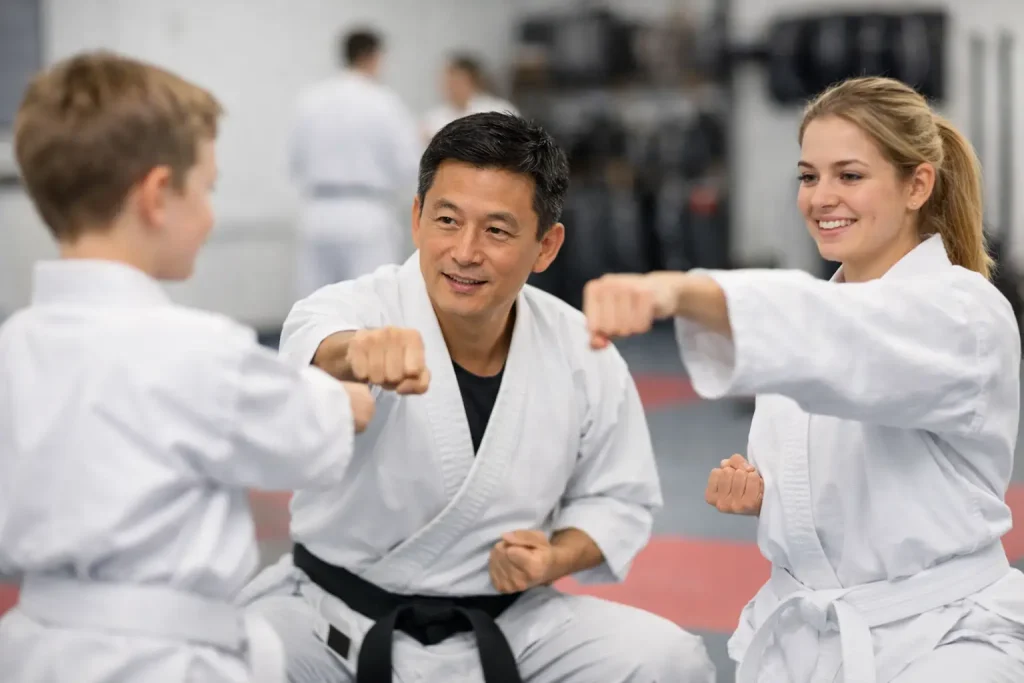
Walking into your first training session can feel bigger than it looks from the outside. A good beginner martial arts class guide should not just tell you what to wear or when to show up. It should help you understand what kind of training fits your goals, what a healthy school culture looks like, and how to start with confidence instead of hesitation.
That matters because beginners are rarely choosing only a workout. They are choosing an environment. Parents are looking for structure and character development for their children. Adults may want practical self-defense, better fitness, stress relief, or a disciplined path they can stay with for years. The right class should meet you where you are, then challenge you to grow.
What a beginner martial arts class should really do
Your first class is not supposed to prove how tough, flexible, or athletic you are. It should introduce you to the rhythm of training. That means learning how the class is organized, how instructors teach, how students interact, and how safety and respect are handled from the first minute.
A strong beginner program builds foundations before speed. You should expect a warm-up, basic stance and movement instruction, simple drills, and clear coaching. In some systems, you may also see partner work, pad drills, forms, or positional practice on the ground. The details vary by style, but the goal is the same – to help you develop coordination, awareness, discipline, and confidence one layer at a time.
If a class feels chaotic, rushed, or careless with beginners, pay attention. Good martial arts instruction does not throw people into the deep end for entertainment. It teaches with intention.
Beginner martial arts class guide to choosing the right style
The most common beginner question is simple: which martial art should I start with? The honest answer is that it depends on what you want from training.
If your main goal is practical striking and conditioning, Muay Thai or Kenpo Karate may appeal to you. If you are interested in leverage, control, and close-range defense, Brazilian Jiu-Jitsu or Jujitsu may be a better fit. If you want a slower pace with strong emphasis on balance, breathing, and body control, Tai Chi can be an excellent starting point. If weapons training, tactical awareness, or self-defense application matter most, Filipino Kali, Krav Maga, or integrated self-defense programs may stand out.
For children, the best style is often the one that balances skill-building with structure. Kids usually benefit most from classes that reinforce listening, respect, focus, and perseverance while still keeping training engaging. For adults, the deciding factor is often whether they want tradition, combat application, personal discipline, or a blend of all three.
This is where experience and leadership matter. A school with deep roots and broad teaching experience can help new students avoid the mistake of choosing based on hype alone. At TAMA Martial Arts Center, that long view has mattered since 1976, because beginners need more than variety. They need guidance.
What to expect in your first few classes
Most beginners worry about being embarrassed, out of shape, or behind everyone else. In a healthy school, those fears fade quickly. You are not expected to know the terminology, memorize combinations, or move perfectly right away. You are expected to pay attention, try hard, and stay coachable.
Your first few classes will probably feel mentally busy. You may be thinking about where to stand, how to move, when to switch sides, and what your hands or feet are doing all at once. That is normal. Martial arts asks your body and mind to work together in new ways, and that can feel awkward before it feels natural.
Physical intensity also depends on the program. Some beginner classes are demanding from day one, especially in striking or conditioning-based systems. Others build gradually, especially when technical precision or age-specific instruction is the priority. Neither approach is automatically better. What matters is whether the school scales the training responsibly and keeps beginners progressing without burning them out.
How to know if a school is right for your family
A good beginner martial arts class guide should help you judge the school, not just the style. The right academy has standards. You should see respectful instruction, organized classes, and students who reflect the values being taught.
Look at how instructors correct mistakes. Are they clear and encouraging, or harsh and careless? Watch how advanced students treat newer ones. In a strong martial arts culture, senior students help set the tone. They model humility, discipline, and control, not ego.
If you are a parent, notice whether the school teaches more than movement. Martial arts can help children build confidence, but confidence without discipline is not the goal. The better outcome is self-control, resilience, focus, and respect that carries into school, home, and everyday life.
For adults, ask whether the class feels purposeful. Plenty of workouts can leave you tired. Martial arts should leave you sharper. Even on a hard training day, you should feel that you are building skill, not just surviving exercise.
What to wear and bring to a beginner martial arts class
You do not need to show up looking like an expert. In fact, most schools expect beginners to start simply. Wear comfortable workout clothes unless the school tells you otherwise. Bring water, arrive clean, and trim your nails if you will be doing partner work or grappling. Remove jewelry and anything that could create a safety issue.
Some styles require a uniform later, while others allow athletic gear for introductory classes. If sparring gear or gloves are needed, the school will usually explain when to buy equipment and what level is appropriate. New students do not need to purchase everything on day one.
The better thing to bring is humility. Be ready to listen. Be ready to ask questions. Be ready to repeat basic movements many times. That repetition is not a sign that class is too simple. It is how strong habits are built.
Common beginner mistakes and how to avoid them
One mistake is treating the first class like a test. It is not. You are there to learn, not to impress anyone. Trying to go too hard too soon often leads to frustration, sloppy technique, or injury.
Another mistake is choosing only with your eyes. A flashy class can look exciting from the sidelines, but what matters is whether the instruction is structured and sustainable. The best school for you may not be the loudest one. It may be the one where progress is consistent and the teaching is real.
Beginners also quit too early when training feels unfamiliar. The first few weeks can challenge your coordination, your stamina, and your patience. That does not mean you picked the wrong path. It usually means you are in the early stage of learning something valuable.
Finally, some people expect every class to feel the same. It will not. Some days you will feel strong. Some days you will feel clumsy. Progress in martial arts is steady, but it is rarely perfectly linear.
The beginner martial arts class guide mindset that helps most
The students who last are not always the most naturally athletic. They are often the ones who show up consistently, accept correction, and understand that discipline beats mood. They begin to see training as a practice, not a performance.
That mindset is especially important for families. Children benefit when parents support the process rather than chase instant results. Adults benefit when they stop comparing themselves to experienced students and focus on their own growth. Martial arts has a way of revealing character. It teaches patience, accountability, and resilience because those qualities are required to improve.
There is also value in starting before you feel fully ready. Confidence usually does not arrive first. Action does. Then confidence grows because you kept your word to yourself, learned something difficult, and came back again.
When to commit and when to keep looking
After a trial class or an introductory period, ask yourself a few honest questions. Did the instruction feel credible? Did the culture feel respectful? Could you picture yourself or your child training there consistently? Did the class challenge you in a way that felt meaningful rather than random?
If the answer is yes, commit long enough to give the process a fair chance. Real training takes time. If the answer is no, keep looking. Not every school is the right fit, and that is fine. The goal is not to join just anywhere. The goal is to begin in a place that takes your development seriously.
Your first class is not the finish line for confidence, fitness, or self-defense. It is the moment you stop waiting and start building the kind of strength that carries into the rest of life.